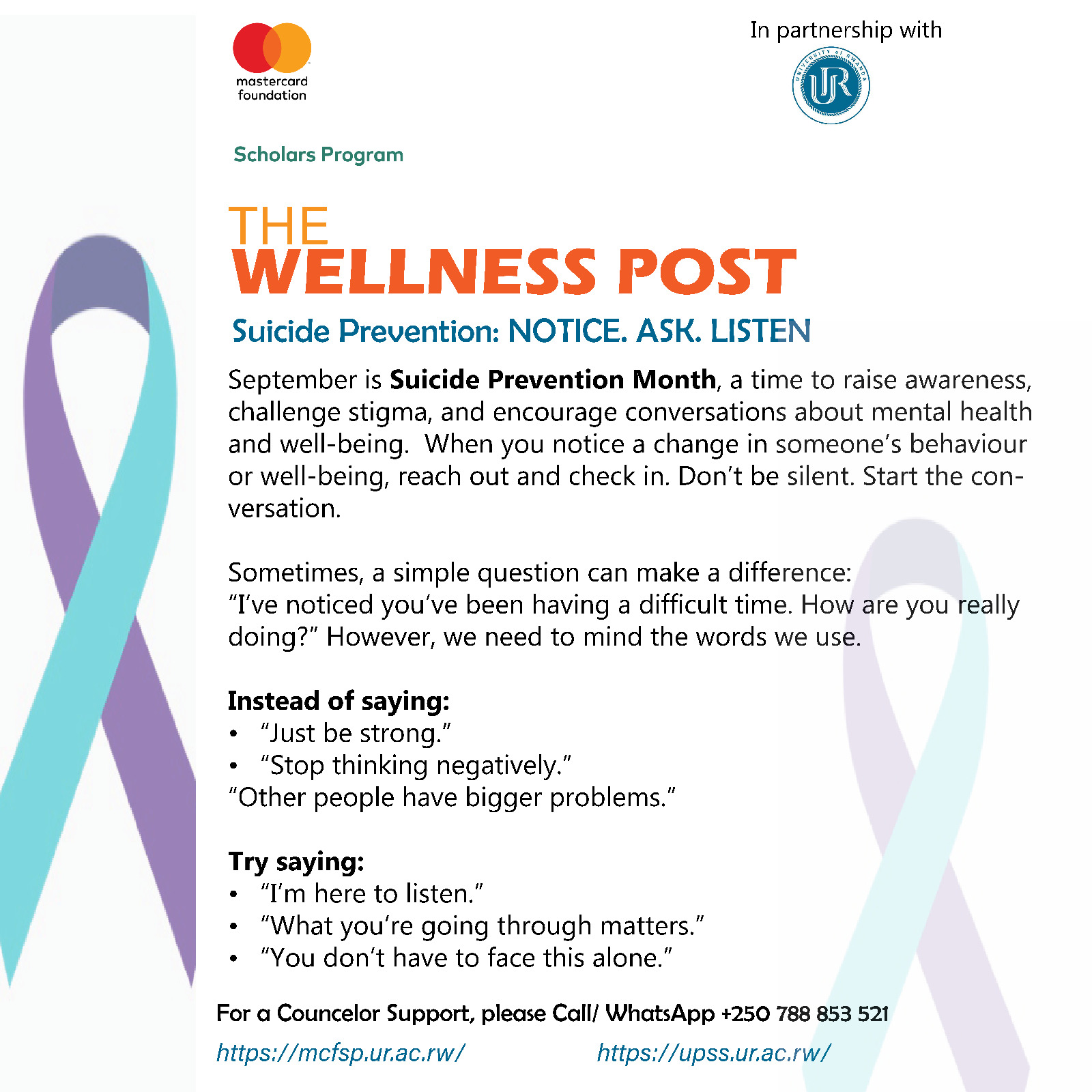
The Wellness Post: Suicide Prevention Month: Start the Conversation
September is Suicide Prevention Month, a time to raise awareness, challenge stigma, and remind young people that they do not have to face difficult moments alone.
The 2026 World Suicide Prevention Day theme is “Changing the narrative on suicide,” with the call to action: “Start the Conversation.” The message is simple but powerful: talking openly and compassionately about emotional distress can help create environments where people feel safe to ask for support.
Why should we talk about suicide?
Suicide remains an important public health concern worldwide. According to the World Health Organization, approximately 727,000 people die by suicide each year, and suicide is the third leading cause of death among people aged 15–29.
Young people may experience pressures related to school, relationships, family, finances, loneliness, bullying, loss, trauma, or uncertainty about the future. Sometimes, several difficulties can come together and make a person feel overwhelmed.
This does not mean that every young person experiencing difficulties will think about suicide. But it reminds us why emotional support, early help and connection matter.
Start the conversation
You don't need to be a psychologist to show someone that you care. If you notice that a friend has become unusually withdrawn, hopeless, distressed, or different from their usual self, you can start with something simple: “I have noticed you have been having a difficult time lately. How are you really doing?”
Then listen. You don't need to immediately solve the person's problems. Sometimes, feeling heard without judgment can be an important first step toward seeking help.
Avoid responses such as:
- “Just be strong.”
- “Other people have bigger problems.”
- “You have nothing to worry about.”
- “Stop thinking negatively.”
Instead, try:
· “I'm here to listen.”
· “What you are going through matters.”
· “You don't have to deal with this alone.”
· “Let's find someone who can support you.”
Take signs of distress seriously
Changes such as withdrawing from others, expressing hopelessness, talking about death, or experiencing severe emotional distress should not simply be dismissed.
If someone tells you they are thinking about suicide, take them seriously, stay with them if there is immediate danger, and help them connect with appropriate professional or emergency support. You do not have to manage the situation alone.
Start the conversation. Listen with compassion. Connect people to support. You may not have all the answers, but you can help someone feel less alone.
With Love
Christella ISHIMWE
Psychosocial Support Officer
Mastercard Foundation Scholars Program
University of Rwanda