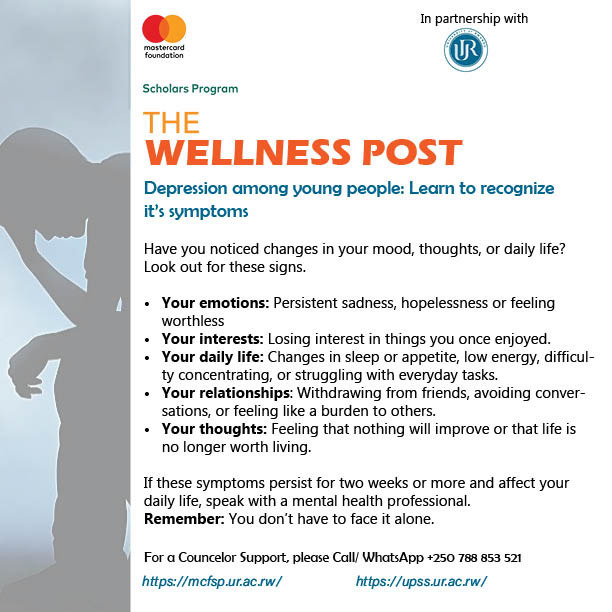
The Wellness Post: Depression Among Young People: Learn to Recognize It’s Symptoms
Young people face many pressures as they navigate school, university, relationships, family expectations an traumas, financial difficulties, career uncertainty, and the transition into adulthood. While stress and occasional sadness are normal parts of life, sometimes emotional distress becomes more persistent and begins to affect how a person thinks, feels, behaves, and functions in daily life.
Depression can affect anyone. It can affect the friend who suddenly becomes quiet, the student who struggles to concentrate, the person who always makes everyone laugh, and even you.
1. What does research tell us about depression among young people?
Depression among young people is a significant public health concern.
- Globally, one in seven adolescents aged 10–19 experiences a mental health condition. Depression and anxiety are among the leading causes of illness and disability in this age group, according to the World Health Organization (WHO).
- In Rwanda, the 2023 National Mental Health Survey found that 9.8% of adolescents experienced depression.
These figures remind us that mental health challenges are not rare, and no one should feel ashamed of experiencing them.
2. How can you recognize depression in yourself?
Ask yourself whether you have noticed any of these changes.
Emotionally
- Have I been feeling sad, empty, hopeless, or unusually irritable?
- Have I been feeling worthless or blaming myself excessively?
- Have I lost interest in activities that used to make me happy?
- Do I feel emotionally numb, even when things happen that would usually make me happy?
In my daily life
- Have I been withdrawing from people or avoiding conversations?
- Am I struggling to get out of bed, attend classes, or complete ordinary tasks?
- Have my sleeping or eating habits changed significantly?
- Am I finding it difficult to concentrate, make decisions, or remember things?
- Have I stopped taking care of myself as I normally would?
In my thoughts
- Do I frequently feel that nothing will improve?
- Do I feel like a burden to others?
- Have I been thinking that life is no longer worth living?
If you notice several of these experiences occurring persistently, particularly for two weeks or more, and affecting your daily functioning, consider speaking with a qualified mental health professional. If you are thinking about suicide or harming yourself, seek help immediately rather
3. What should you do if you recognize signs of depression in yourself or someone else?
Whether you are the person struggling or the person offering support, remember these steps.
Recognize. Pay attention to persistent changes in emotions, thoughts, and behavior.
Talk. Share what you are experiencing with someone you trust, or create a safe space for another person to open up.
Seek support. Request support to a counsellor or a psychologist, through.
Stay connected. Maintain contact with supportive people, even when you do not feel like socializing. Small steps are enough to begin.
Follow up. Recovery may take time. Continue checking on yourself and the people you care about.
If you or someone else may be in immediate danger of suicide, seek urgent professional assistance and do not leave the person alone if it is safe for you to stay. Your mental health matters. You do not have to face your struggles alone. Sometimes, change begins with two simple questions: “How am I really doing?”, “How are you really doing?”
With Love!
ISHIMWE Christella
Psychosocial Support Officer
Mastercard Foundation Scholars Program
University of Rwanda