Wellness Post: Navigating Family Conflict: Coping Tips for Young People
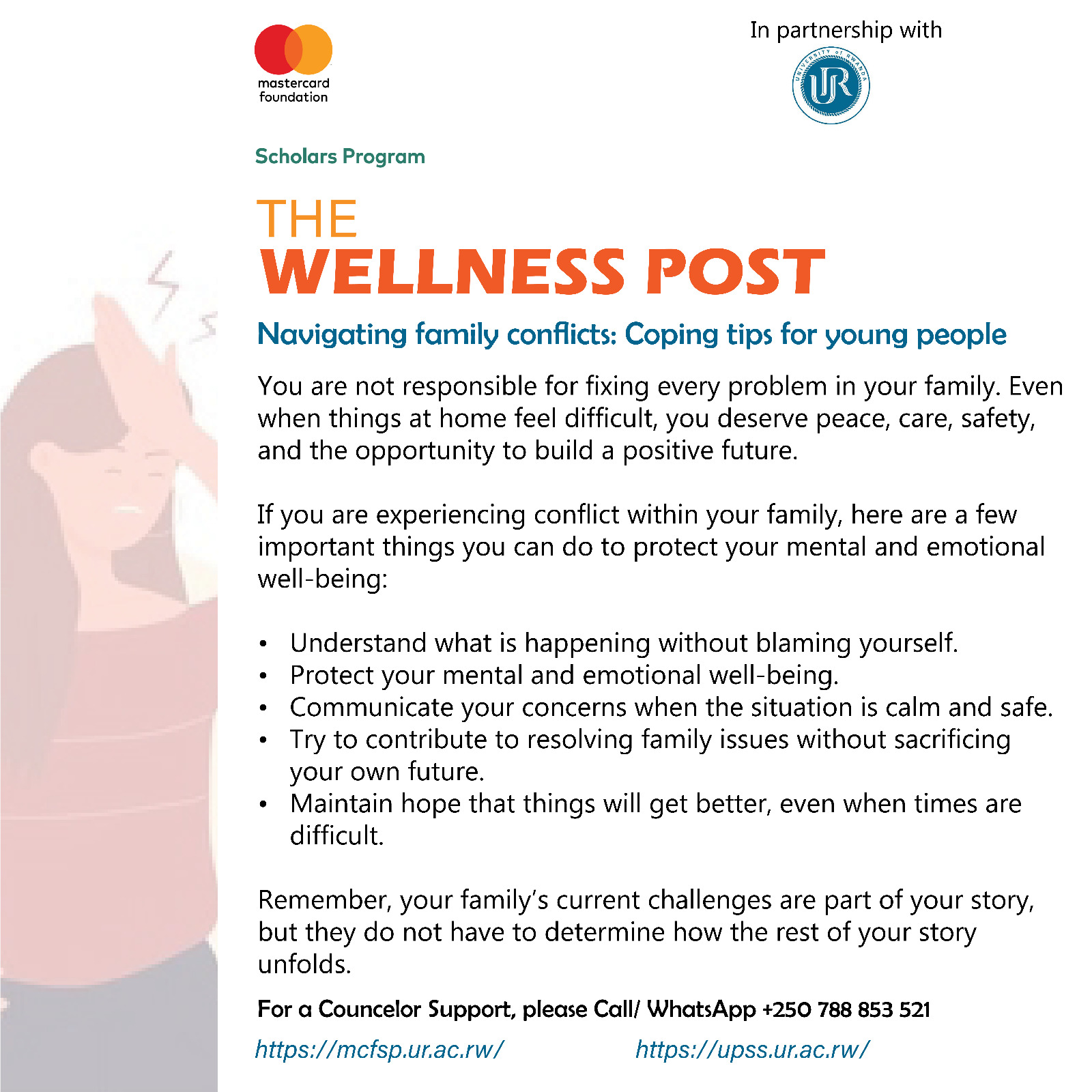
You are not responsible for fixing every problem in your family. Even when things at home feel difficult, you deserve peace, care, safety, and the opportunity to build your future.
Growing up in a family where parents frequently argue for example about money can be emotionally exhausting, especially when their disagreements affect the family's ability to meet basic needs such as food, school fees, clothing, healthcare, and housing. Financial difficulties can create tension in a household, particularly when money is mismanaged, expenses are not well planned, or parents disagree about financial priorities. For a young person, watching these conflicts can lead to sadness, anxiety, anger, shame, helplessness, or fear about the future.
Sometimes, young people may feel caught between their parents, pressured to choose sides, or responsible for finding solutions to problems they did not create. If you are experiencing this situation, there are important things you can do to protect your emotional wellbeing, seek support, and take positive steps toward your future.
1. Understand what is happening without blaming yourself
One of the first steps in coping with family conflict is recognizing that your parents disagreements are not your fault. It is understandable to feel disappointed, especially when these decisions affect your daily life. However, remember that you are not responsible for your parents' decisions or for resolving their disagreements.
2. Protect your mental and emotional wellbeing
Living with repeated conflict can affect your concentration, sleep, confidence, relationships, and academic performance. You may find yourself constantly thinking about what is happening at home, even when you are at school or with friends.
Allow yourself to acknowledge what you feel. Find healthy ways to release stress. You can write in a journal, take a walk, exercise, listen to calming music, pray or meditate if that is meaningful to you, or speak with someone you trust. When your parents are arguing, you do not have to act as their mediator or prove who is right. If it is safe, move to another room or a peaceful place until the situation calms down.
A predictable routine can help you maintain a sense of stability even when home feels unpredictable. You may sometimes feel distracted, tired, or less productive than usual. Rather than criticizing yourself, recognize that you are dealing with a difficult situation and may need additional support. If the stress becomes overwhelming or begins affecting your daily functioning, consider speaking with a counsellor or mental health professional.
3. Communicate your concerns when the situation is calm and safe
If you feel safe doing so, consider talking to your parents when they are calm rather than during an argument. Instead of accusing one parent, focus on how the situation affects you and what you need. If talking directly is unsafe or likely to escalate the conflict, do not put yourself at risk. Seek support from a trusted adult or professional who can help you consider safer options.
4. Do not sacrifice your future trying to rescue your family
Young people sometimes feel compelled to solve their family's financial difficulties, especially when they see their parents struggling.You may feel pressure to find a job, abandon your studies, borrow money, take on debts, or use all your savings to meet family needs.
If you are still studying, protecting your education and developing skills can be an important investment for a better future. It is okay to care about your family while also building a life in which you have greater stability and independence.
5. Give yourself permission to hope for a different future
Your family situation may be difficult today, and you may not be able to change your parents' behaviour. Nevertheless, you can gradually develop the skills, support networks, and coping strategies that help you move toward a more stable future. Healing does not mean pretending that the problems at home do not exist. It means learning how to respond to them without allowing them to define your entire identity or future. You can acknowledge the pain of your current situation while still making room for hope.
Your family's current challenges are part of your story, but they do not have to determine how the rest of your story unfolds.
Remember that if you are struggling, you do not have to wait until things become unbearable before asking for help. You deserve support now.